What is a Rave?
What Is a Rave? The Complete Guide to Rave Culture, Music, and What to Expect
So you've heard the word thrown around a hundred times. Maybe your friend invited you to one. Maybe you stumbled across a video of thousands of people dancing under laser beams at 3am and thought: what exactly is a rave? Fair question. And the answer is way more interesting than most people expect.
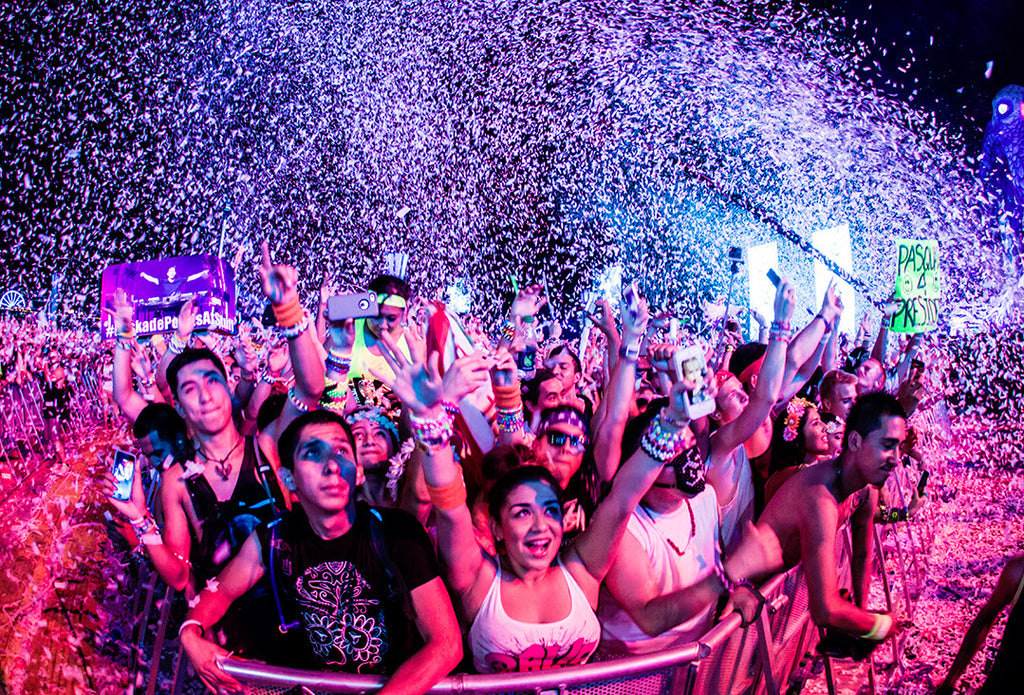
A rave is a large dance party, usually centered around electronic music, where DJs perform live sets for crowds that range from a few dozen people in a warehouse to tens of thousands at a professional venue. That's the simple rave definition. But the reality of rave culture runs so much deeper than that one sentence. Raves are about community, self-expression, music that physically moves through your body, and a shared energy that's genuinely hard to describe until you've felt it firsthand.
Whether you're researching your first event or just curious about what all the hype is about, this guide covers everything. The history. The music. What to wear. How to prepare. Let's get into it.
The History of Raves: From Underground Warehouses to Massive Festivals
The rave meaning we know today traces back to the late 1980s and early 1990s. The original underground rave scene started in cities like Detroit, Chicago, and London. DJs would set up sound systems in abandoned warehouses, empty fields, or any space large enough to hold a crowd and loud enough that nobody would complain. There were no tickets. No lineups posted on Instagram. You found out about an underground rave through word of mouth, a flyer handed to you at a record shop, or a phone number you'd call the night of to get the secret location.
These early rave parties were raw and unpolished. Concrete floors. No bottle service. Just music and people who showed up because they genuinely loved the sound. The DJ wasn't a celebrity on a raised stage. They were in the corner, sometimes barely visible, and the focus was entirely on the collective experience of the room.
Chicago's house music scene and Detroit's techno movement were the beating heart of American rave culture in those early years. Across the Atlantic, the UK acid house movement was exploding simultaneously, with massive outdoor gatherings drawing thousands of people to fields outside London. The energy was rebellious. The music was new. And for a lot of people, attending their first rave party was a life-changing experience.
By the mid-1990s, raves had grown too big to ignore. Local governments started cracking down on unlicensed events, which pushed the scene in two directions. Some organizers went further underground, hosting secret events in locations revealed only hours before start time. Others went legitimate, securing permits, renting proper venues, and eventually building what we now know as the modern electronic music festival circuit.
Today's raves exist on a spectrum. You've got intimate 200-person warehouse events with a single DJ and a fog machine. You've got mid-size club nights. And then you've got the massive productions like EDC, Ultra, and Tomorrowland that draw six-figure crowds with million-dollar stage designs. All of them trace their DNA back to those first underground raves in Detroit basements and London warehouses.
Rave Music: The Genres That Define the Scene
If someone asks you "what are raves about?" the honest answer starts with the music. Rave music is the reason everything else exists. The fashion, the culture, the community, all of it grew out of the sounds that DJs were creating and playing at those early events.
Here's where it gets interesting though. There's no single genre called "rave music." The umbrella is enormous, and part of what makes rave culture so rich is the variety of sounds you'll encounter.
House Music is the foundation. Born in Chicago in the early 1980s, house is built on four-on-the-floor kick drums, synthesized basslines, and soulful vocals. It's warm, it's groovy, and it's the genre that most people can dance to without any prior experience. If you've ever heard a DJ at a beach bar or a rooftop party, you've probably heard house.
Techno came out of Detroit around the same time and took things darker, more mechanical, more repetitive in the best possible way. Techno is hypnotic. It builds slowly, layers sounds on top of each other, and creates a trance-like state that rewards patience. A good techno set at 4am in a dark room is something you don't forget.
Drum and Bass (DnB) runs faster, usually 160-180 BPM, with heavy basslines and breakbeat rhythms. It's intense, it's physical, and DnB crowds tend to be some of the most energetic at any festival.
Trance lives somewhere between techno and house, with melodic progressions and euphoric builds that can genuinely make you emotional on the dance floor. There's a reason trance fans are famously devoted to the genre.
Dubstep and Bass Music brought heavy, distorted bass drops into the mainstream in the 2010s and created an entirely new generation of ravers. If you've been to a Bassnectar or Excision show, you know what this sounds like. It's aggressive, it's loud, and the bass literally vibrates your chest cavity.
Hardstyle and Hardcore push the BPM even higher. These genres dominate European festivals and have a dedicated following that loves the intensity. Not for the faint-hearted, but absolutely worth experiencing at least once.
The beauty of going to a rave or a multi-stage festival is that you can wander between genres all night. Start with house, drift into a techno room, catch a DnB set at 2am. That musical journey is a huge part of what makes the experience special.
What to Wear to a Rave: Outfits That Actually Work
Figuring out what to wear to a rave is one of the most common concerns for first-timers. And honestly? It's one of the most fun parts. Rave fashion has its own universe of rules (or more accurately, a complete absence of rules), and the freedom to wear whatever you want is central to rave culture.
That said, there are some practical considerations worth thinking about before you show up in something you'll regret by hour three.

Comfort is non-negotiable. You're going to be on your feet for hours. Dancing, walking between stages, standing in lines. Whatever you wear needs to move with you and breathe. This is why lightweight fabrics, stretch materials, and minimal layering tend to win out. Our women's rave clothing and men's rave clothing collections are designed with exactly this in mind. Pieces that look incredible but won't leave you overheating two hours into a set.
Shoes matter more than you think. This is the number one mistake first-timers make. Those cute platform boots might look amazing, but if you haven't broken them in, you're going to be in pain by midnight. Comfortable sneakers or well-worn boots are your best bet. Save the fashion-forward footwear for events where you know you won't be walking miles between stages.

Express yourself. This is the part that makes rave fashion so different from everything else. Bright colors, bold patterns, body glitter, LED accessories, face gems, furry boots, mesh tops, holographic everything. At a rave, the more creative the better. Nobody is judging you for going all out. In fact, the opposite is true. People will compliment you, ask where you got your outfit, and want to take photos. The rave community celebrates individuality, and your outfit is one of the best ways to show up as yourself.
Layer smart. Outdoor festivals can swing 30 degrees between afternoon and 3am. A lightweight jacket or hoodie you can tie around your waist is worth bringing, even if you don't think you'll need it. Indoor events tend to stay warm from the crowd and the dancing, so plan accordingly.
How to Prepare for Your First Rave
Going to your first rave can feel overwhelming if you don't know what to expect. But honestly, the preparation is pretty straightforward once you know the basics.
Stay hydrated. This is the single most important piece of advice anyone can give you. You're going to be dancing in a crowd, possibly outdoors in the heat, for hours. Bring a refillable water bottle if the venue allows it. Most festivals have free water refill stations. Drink water consistently throughout the night, not just when you feel thirsty.
Protect your hearing. Rave music is loud. Really loud. And prolonged exposure to high decibel levels can cause permanent hearing damage. Invest in a pair of high-fidelity earplugs. They reduce volume without killing the sound quality, and your ears will thank you the next morning. This isn't optional. It's essential.
Plan your logistics ahead of time. Know how you're getting there and how you're getting home. Rideshare surge pricing after a major event can be brutal, so consider splitting a ride with friends or using a shuttle service if one is available. If it's a multi-day festival, research camping or hotel options well in advance because they sell out fast.
Go with friends, but don't panic if you get separated. Set a meeting point in case you lose each other. Cell service at large events is notoriously unreliable, so having a physical backup plan is smart. That said, some of the best rave experiences happen when you wander off on your own and meet new people. The community is welcoming, and striking up a conversation with a stranger is completely normal.
Know the vibe. Different events have very different atmospheres. A warehouse techno night is nothing like a massive EDM festival. Do a little research beforehand. Check the lineup, look at photos or videos from past editions, and read reviews from people who've been. This helps you set expectations and plan your outfit, your energy level, and your schedule.
Raves vs. Music Festivals: What's the Difference?
People use "rave" and "music festival" interchangeably, but they're not exactly the same thing. Understanding the difference helps you figure out which type of event is right for you.
A rave, in the traditional sense, is focused almost entirely on the music and the dance floor. The DJ is the center of the experience. The crowd is there to move. The production might be minimal or it might be elaborate, but the core purpose is dancing to electronic music in a shared space.
A music festival is broader. Festivals like Coachella, Bonnaroo, or Lollapalooza feature multiple genres across many stages, plus food vendors, art installations, brand activations, and other experiences beyond the music. You might spend half your day not even watching a set. Electronic music festivals like EDC, Electric Forest, and Beyond Wonderland blur the line because they combine the rave energy and DJ-focused programming with the scale and production of a traditional festival.
Neither format is better than the other. They're just different experiences. Many ravers love both. If you're trying to decide where to start, a mid-size electronic music event or a single-night rave at a local venue is a great entry point. You get the full experience without the commitment of a multi-day camping festival.
Read more: What is the Difference Between a Rave and a Music Festival?
Ready to Experience Your First Rave?
Now you know what a rave is, where the culture came from, what music to expect, and how to prepare. The only thing left is to actually go to one. Find an event near you, put together an outfit that makes you feel like the best version of yourself, grab your friends, and show up ready to dance.
The rave community is one of the most welcoming spaces you'll ever walk into. It doesn't matter if you've never been before. It doesn't matter if you don't know the DJ names or the genre differences yet. What matters is that you're there, you're open to the experience, and you're ready to feel the music. Everything else falls into place once the bass drops.
Browse our full collection of women's rave clothing and men's rave clothing to find your perfect festival look.
 Your Privacy Choices